
Circadian Rhythm and Sleep: How Your Body Clock Shapes Better Rest
- June 23, 2026
- 4 min read

Your body does not only need a bedtime.
It needs a rhythm.
That is why sleep can feel difficult even when you go to bed at the right time. The clock may say it is late, but your body may not feel ready for sleep yet.
Circadian rhythm is your body's internal timing system. It helps your body know when to feel alert, when to slow down, and when to prepare for rest.
Sleep is not only about how tired you feel.
It is also about whether your body clock understands that night has arrived.
Quick Take
- Circadian rhythm is your body's internal body clock.
- It helps shape when you feel awake, sleepy, hungry, and ready for rest.
- Light is one of the strongest signals your body clock reads.
- Irregular timing, bright evenings, and weekend schedule changes can make bedtime feel less natural.
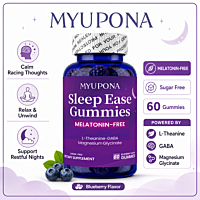
- MYUPONA Sleep Ease Gummies can fit into a calmer evening rhythm as a melatonin-free relaxation support step before bed.*
What Circadian Rhythm Means for Sleep
Circadian rhythm is often called the body clock.
It helps your body separate day from night.
During the day, your body is meant to feel more alert. At night, your body should begin shifting toward rest.
When that rhythm is steady, bedtime can feel more natural.
When the rhythm is disrupted, bedtime can feel harder.
You may lie down at the right time, but your body may not feel ready for sleep. You may feel tired, but not truly sleepy.
That is why circadian rhythm matters. It affects the timing of sleep, not just the amount of sleep.
Sleep Pressure vs. Body Clock: Why Tired Is Not Always Sleepy
Feeling tired and feeling sleepy are not always the same thing.
Sleep pressure builds the longer you stay awake. After a long day, your body may feel drained from work, stress, decisions, and activity.
Your body clock is different.
It helps decide whether the current time feels like a good time to be awake or a good time to sleep.
Sleep pressure says: you need rest.
Your body clock may still be saying: the day is not fully over.
That is why you can feel exhausted and still not feel ready for sleep. A better night depends on both: enough sleep pressure and a body clock that recognizes night.
How Daily Signals Shape Your Body Clock
Your body clock reads the signals you give it throughout the day.
Morning light, wake-up time, meals, caffeine, evening light, and weekend schedules all help your body understand when it is daytime and when it is time to move toward rest.
When those signals are consistent, your body clock has a clearer rhythm to follow.
When those signals are mixed — dim mornings, bright evenings, late caffeine, or big weekend sleep shifts — bedtime can feel less natural.
The goal is not to make every habit perfect.
It is to make day and night easier for your body to tell apart.
Light Timing Is the Strongest Signal
Your body does not only listen to the clock on the wall.
It listens to light.
Morning light helps tell your body that the day has started. Darkness in the evening helps your body prepare for night.
The issue is not only phone blue light.
Bright light at night, whether from screens or room lights, can make the body feel like the day is still continuing.
That is why light timing matters. The same light that helps you feel awake earlier in the day can work against you when it appears too close to bedtime.
Social Jet Lag: Why Weekends Can Shift Your Sleep
You do not have to travel to feel jet-lagged.
It can happen inside your own week.
For many people, weekdays and weekends follow different schedules. You wake up early during the week, stay up later on weekends, sleep in on free days, then try to return to an earlier schedule by Monday.
That shift can pull your body clock later.
By Sunday night, your body may not feel ready to sleep early. By Monday morning, your alarm may feel harder because your body has not fully shifted back.
A steadier wake-up time gives your body clock a clearer anchor.
How to Give Your Body Clock Clearer Signals
Supporting your body clock does not require a complicated routine.
It starts with clearer day and night cues.
Get Light Earlier in the Day
Morning light helps your body recognize that the day has started.
This can be as simple as opening the blinds, stepping outside for a few minutes, or getting daylight during the first part of the morning.
Keep Wake-Up Time More Consistent
Wake-up time helps anchor your body clock.
It does not need to be perfect every day, but large swings between weekdays and weekends can make your rhythm harder to follow.
Make Evening Feel Different From Daytime
Evening should feel less bright, less busy, and less stimulating than the middle of the day.
Lower light, fewer screens, fewer work messages, and a calmer routine help your body understand that the day is closing.
MYUPONA Sleep Ease Gummies can fit into that quieter part of the evening as one simple, melatonin-free step for relaxation support before bed.*
The Bottom Line
Your sleep is not shaped by bedtime alone.
It is shaped by the rhythm your body follows across the whole day.
Light, wake-up time, meals, caffeine, weekend schedules, and evening habits all help tell your body whether it is time to stay alert or prepare for rest.
When those signals are scattered, bedtime can feel harder.
When those signals are clearer, sleep can feel more natural.
MYUPONA Sleep Ease Gummies can be one simple part of that evening rhythm — a melatonin-free step designed to support relaxation before bed.*
Explore MYUPONA Sleep Ease Gummies
A melatonin-free bedtime gummy designed to support relaxation before bed as part of a calmer evening routine.*
Shop Sleep Ease Gummies*These statements have not been evaluated by the Food and Drug Administration. This product is not intended to diagnose, treat, cure, or prevent any disease.
References
- National Institute of General Medical Sciences. Circadian Rhythms. https://www.nigms.nih.gov/education/fact-sheets/Pages/circadian-rhythms.aspx
- National Heart, Lung, and Blood Institute. Sleep Deprivation and Deficiency — Healthy Sleep Habits. https://www.nhlbi.nih.gov/health/sleep-deprivation/healthy-sleep-habits
Related Products
Recent Posts
-
Everyday Care, Inside and Out
 June 26, 2026
 -
Working Out Before Bed? How to Wind Down After an Evening Workout
 June 25, 2026
 -
Circadian Rhythm and Sleep: How Your Body Clock Shapes Better Rest
June 24, 2026
-
Common Questions About Cooling and Warming Massage Balms
 June 24, 2026